
Michael Schwartz, DMD

Can a Cracked Tooth Cause Pain When Drinking Cold Water?

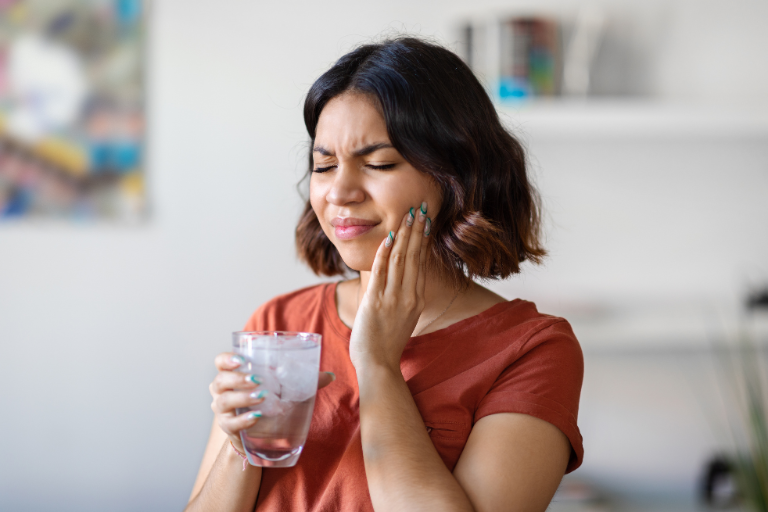
That sudden, sharp jolt of pain when you take a sip of ice-cold water you know the one. It’s brief, but it stops you cold (pun intended). If this is happening to you, there’s a good chance a cracked tooth is behind it. And here in the Scottsdale area, where summers are brutal and iced drinks are practically a survival tool, this is something we see at the dental chair more often than you’d think.
So, can a cracked tooth really cause pain when drinking cold water? The short answer is yes and ignoring it can lead to bigger problems down the road.
Why Cold Water Triggers Tooth Pain
Your tooth has layers. The hard outer shell is called enamel, beneath that is dentin, and at the very center is the pulp, a bundle of nerves and blood vessels. When a tooth cracks, even in a hairline pattern that’s invisible to the naked eye, it creates a pathway. Cold water seeps into that crack, reaches the dentin or pulp, and triggers a sharp nerve response.
This reaction is known as dentin hypersensitivity, and it’s one of the most common reasons people visit a dentist in Scottsdale for an unscheduled appointment. The discomfort can range from a mild twinge to a searing jolt, and it often disappears within seconds which is exactly why so many people put off seeking care.
That “wait and see” approach, though, is where things can go wrong.
What Causes a Tooth to Crack?
Cracked teeth don’t always come from a dramatic moment like biting into a jawbreaker. In fact, many cracks develop gradually over time. Common causes include:
- Chewing on hard foods like popcorn kernels, ice (ironic, given our topic), or hard candy
- Teeth grinding (bruxism), which is especially common among people who carry a lot of stress
- Large old fillings that weaken the surrounding tooth structure
- Sudden temperature changes like eating hot food followed immediately by cold water
- Trauma from a sports injury or minor accident
Here in North Scottsdale and the greater Phoenix metro, we also see patients who clench their teeth during sleep, often tied to lifestyle stress. It’s more prevalent than most people realize, and it quietly does damage over months and years.
Signs Your Cold Water Pain Might Be a Cracked Tooth
Not all tooth sensitivity is caused by cracks, but there are some telling signs:
- Pain that occurs specifically when biting down and then releasing (not just when chewing)
- Sensitivity to cold that lingers more than a few seconds
- Intermittent pain that’s hard to predict or pinpoint
- Discomfort only on one side of the mouth
- A tooth that feels fine at the dentist but hurts at home
If any of these sound familiar, it’s time to check the trusted dentist and get a proper evaluation. Cracked tooth syndrome can be tricky to diagnose because cracks don’t always show up on X-rays. An experienced dentist will use other clinical techniques including biting pressure tests and special dye to locate the crack.
What Happens If You Leave It Untreated?
This is where things get serious. A crack that starts small can worsen with every bite, every sip of cold water, and every grinding episode at night. Over time:
- The crack can extend deeper into the tooth, reaching the pulp
- Bacteria can enter through the crack and cause infection
- An abscess can form, leading to severe pain and swelling
- In the worst cases, the tooth may need to be extracted entirely
Treating a cracked tooth early when it’s still minor is almost always simpler and less expensive than addressing it after it’s progressed. Most early-stage cracks can be treated with bonding, a crown, or sometimes a root canal if the pulp is already affected.
Treatment Options Your Dentist May Recommend
The right treatment depends on where the crack is located, how deep it runs, and whether the pulp is involved. A dentist in Scottsdale will typically take a conservative approach first, moving to more involved treatment only if necessary.
Dental Bonding – For minor surface cracks, tooth-colored resin is applied to seal the crack and restore the appearance of the tooth.
Dental Crown – If the crack is more extensive but hasn’t reached the pulp, a crown caps the tooth to hold it together and prevent the crack from spreading.
Root Canal Therapy – If the crack has reached the nerve, the pulp needs to be removed and the tooth sealed before a crown is placed.
Extraction – In rare cases where the crack runs below the gumline or through the root, the tooth may not be salvageable.
Local Tip for Scottsdale Residents: Don’t Wait Until It Hurts More
Living in Scottsdale means long, hot summers and a lifestyle that often includes outdoor dining, cold smoothies, and refreshing iced drinks. All of those cold beverages are perfectly fine unless you have a compromised tooth that’s sending you warning signals every time you take a sip.
Old Town Scottsdale, Kierland, McCormick Ranch, DC Ranch no matter which neighborhood you call home, dental pain is something that shouldn’t be brushed off. The longer you wait, the more complex the treatment tends to become. Patients who come in early for sensitivity symptoms are far more likely to walk out with a simple, affordable solution.
A dentist scottsdale az residents trust will be equipped to do a thorough evaluation, capture detailed X-rays, and use clinical diagnostic tools to locate even hairline cracks that aren’t visible to the eye.
Dr. Schwartz and his team are fantastic. Just moving to the area, it’s always tough to trust a new dentist office. M Carse
Join the many happy patients who’ve shared their experiences read our Google reviews today
Ready to Get Relief? Visit Pinnacle Peak Dentist
At Pinnacle Peak Dentistry, we understand that tooth pain doesn’t wait for a convenient time to show up. Our Scottsdale practice is built around compassionate, thorough care whether you’re coming in for a routine cleaning or an urgent concern like a cracked tooth.
If cold water has been giving you that sharp, familiar zing, don’t put it off. Our team uses the latest diagnostic tools to get to the root of the problem quickly, and we’ll work with you to find a treatment plan that fits your schedule and your budget.
Book your appointment today at Pinnacle Peak Dentistry and take the first step toward a pain-free life without tooth sensitivity.
Serving patients across Scottsdale, Paradise Valley, Fountain Hills, Cave Creek, and the greater North Phoenix area.
Frequently Asked Questions
Can a cracked tooth heal on its own?
No teeth can’t regenerate like bones. A crack will only get worse without treatment.
Is cold sensitivity always a sign of a cracked tooth?
Not always. It can also stem from gum recession, enamel erosion, or a cavity a professional exam will pinpoint the cause.
Will a dentist always be able to see a crack on an X-ray?
Not always. Hairline cracks are often invisible on X-rays, so an experienced Scottsdale dentist may use bite tests, transillumination, and other diagnostic techniques to locate the source of the problem.
How long does treatment take?
Minor cracks can often be treated in one visit. More involved cases like root canals may take two appointments. Your dentist will lay out the plan upfront.
Can I manage the pain at home in the meantime?
Desensitizing toothpaste can take the edge off, but it won’t fix the problem. Avoid very cold or hard foods and see a dentist in Scottsdale as soon as you can.